

There is a question I often return to when someone tells me they feel not good enough:
Who taught you that?
Not because I want to blame someone. Not because the answer is always obvious. And certainly not because understanding where the belief came from makes it disappear overnight.
I ask because many of us carry beliefs about ourselves that began as someone else’s words, expectations or disappointment. Over time, those beliefs can become so familiar that we mistake them for facts.
“I’m not clever enough.”
“I’m too much.”
“I should be further ahead by now.”
“Nobody would choose me if they really knew me.”
These thoughts can feel deeply personal. But sometimes they are old messages that we have absorbed and carried into adulthood.
Self-esteem is not about believing you are perfect. It is about developing a steady, realistic sense that you have value, even when you make mistakes, struggle, disappoint someone or fall short of your own expectations.
So, who taught you that you weren’t enough?
Where does low self-esteem come from?
The NHS describes self-esteem as the opinion we have of ourselves. When that opinion becomes consistently negative or critical, it can affect how we see our abilities, relationships and place in the world.
Low self-esteem often begins early. The messages we receive from parents, carers, teachers, siblings, friends and the media can all shape the way we understand ourselves. Sometimes the message is direct:
“You’re always causing problems.”
“You’re too sensitive.”
“You’ll never amount to much.”
Other times, it is more subtle. Perhaps affection seemed to arrive mainly when you achieved something. Perhaps mistakes were met with ridicule or silence. Perhaps you were compared with a sibling, a classmate or an impossible standard.
The message does not have to be true to become powerful
Children are naturally dependent on the people around them. If an important adult repeatedly communicates that a child is difficult, disappointing or incapable, the child may not think, “That is their opinion.”
They may think, “That is who I am.”
This is not because children are weak. It is because they are trying to make sense of their world. If the people they depend on seem unhappy with them, it can feel safer to assume, “There must be something wrong with me.”
As we grow older, these early conclusions can be reinforced by criticism, rejection, bullying, unhealthy relationships, workplace experiences, social media and constant comparison.
The NHS explains that low self-esteem can begin in childhood but can also be affected by stress, difficult life events and the high standards we set for ourselves.
What started as someone else’s message may eventually sound like our own voice.

The inner critic: whose voice is that?
Most of us have an inner critic. It is the voice that notices what went wrong, highlights our flaws and predicts that things will end badly.
Sometimes the inner critic can sound as though it is trying to protect us:
“Don’t speak up. You’ll embarrass yourself.”
“Don’t apply for that job. You’re not qualified enough.”
“Don’t let people get close. They will eventually leave.”
It may believe that if it criticises us first, we will be prepared for criticism from other people.
But protection and punishment are not the same thing.
When self-criticism becomes a way of life
A little self-reflection can help us learn. We can recognise when we have made a mistake, take responsibility and decide what we might do differently.
The inner critic is different. It rarely says, “That choice did not work out.” It says, “You are a failure.”
It does not say, “You could prepare more next time.” It says, “You are useless.”
It turns one experience into a verdict about your entire identity.
This is where self-esteem can become fragile. If your sense of worth depends on getting everything right, being liked by everyone or appearing successful, then every setback feels like proof that you are not enough.
But can one difficult conversation really tell you the whole truth about who you are?
Can one rejection measure your capacity to be loved?
Can a mistake erase every kind thing you have ever done?
What does self-esteem therapy actually do?
When people hear the phrase self esteem therapy, they may imagine being told to repeat positive statements in the mirror or simply “think more positively”.
That is not how I understand the work.
Self-esteem therapy is not about pretending that everything is wonderful. It is about becoming curious about the beliefs that have shaped your life and asking whether they are still accurate, useful or fair.
1. It helps you identify the belief beneath the thought
A person may come to therapy saying:
“I hate my job.”
“I keep choosing the wrong relationships.”
“I cannot cope with criticism.”
As we explore this, we may find a deeper belief underneath:
“I am not capable.”
“I am not worth choosing.”
“If I am not perfect, people will leave.”
The work is not to force a new belief immediately. It is to notice the pattern and understand how it has been influencing choices, relationships and behaviour.
2. It explores where the belief came from
We might gently consider when the belief first appeared.
Who was around you?
What was happening in your life?
What did you need at the time but not receive?
Were you expected to be the responsible one, the successful one, the quiet one or the easy one?
This is not about staying trapped in the past. It is about recognising that your present-day reactions may make more sense when we understand their history.
3. It separates fact from old fear
Therapy can help you examine the evidence for the conclusions you have drawn about yourself.
If the belief is “Nobody cares about me”, we might ask:
Is that completely true?
Who checks in with you?
Who has shown kindness, even in small ways?
Have there been times when you have mattered to someone, even if your inner critic refuses to count them?
This is not about collecting evidence to win an argument with yourself. It is about making room for a fuller and more balanced picture.
4. It builds a kinder relationship with yourself
Self-compassion is not self-indulgence. It does not mean avoiding responsibility or pretending that harmful behaviour is acceptable.
It means responding to yourself with the same honesty and care you might offer someone you love.
If a friend made a mistake, would you tell them they were worthless? If they were struggling, would you demand that they recover immediately? If they were afraid, would you mock them for feeling that way?
If not, why should you be spoken to differently?
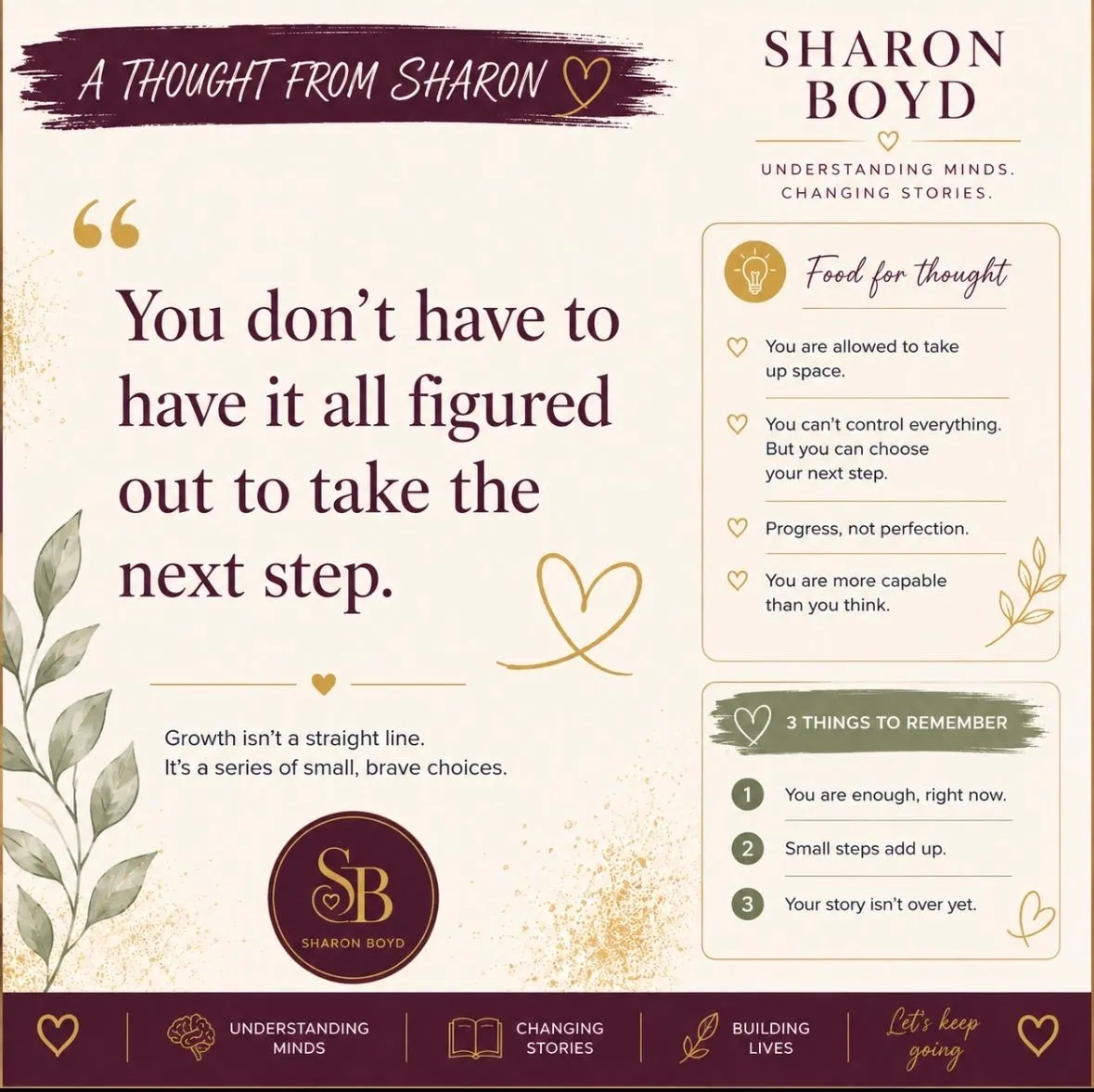
Small, honest steps towards self-worth
You do not have to transform your self-esteem in one dramatic moment. In fact, lasting change is often quieter than that.
It may begin with noticing the sentence your inner critic repeats.
Write it down.
Then ask:
Is this my voice, or an old message?
You may recognise a familiar tone from childhood, school, a past relationship or a culture that taught you to measure yourself through achievement, appearance or approval.
What would be a more accurate statement?
Not an exaggerated statement that feels false, such as “I am amazing at everything.”
Try something believable:
“I found that difficult, but difficulty does not mean I am incapable.”
“I am learning to set boundaries.”
“I have made mistakes, and I am still worthy of care.”
“I do not have to earn my right to exist.”
What small action would support this new belief?
Self-worth grows through experience, not only through thought.
You might say no without giving a long explanation. You might apply for something before you feel completely ready. You might rest without calling yourself lazy. You might allow someone safe to support you instead of insisting that you are fine.
Each of these actions sends a quiet message: I matter too.

You are more than the messages you received
Perhaps someone taught you that you were too sensitive.
Perhaps comparison taught you that you were always behind.
Perhaps criticism taught you that love had to be earned.
Perhaps no one taught you how to value yourself, and you have been trying to work it out alone.
Whatever the origin, the belief that you are not enough is not a permanent identity. It is a belief. Beliefs can be examined, understood and changed.
That change may take time. It may involve therapy, supportive relationships, boundaries, self-compassion and the courage to try something different. You do not have to feel confident before you begin. Sometimes confidence comes after we take the first small step.
If low self-esteem is affecting your relationships, work, mood or everyday life, talking therapies such as counselling or cognitive behavioural therapy may offer useful support. You deserve help that listens to the whole story, not just the symptom.
So I will return to the question I began with:
Who taught you that you weren’t enough : and what might become possible if you stopped treating their message as the final word?
A possible next step
Explore personal therapy ↗Keep reading
Browse Directors' Blog ↗This article was imported from Sharon Boyd’s Directors’ Blog.
Read the original source article ↗